SAN MARCO LA CATOLA - FOGGIA -
(ITALY)
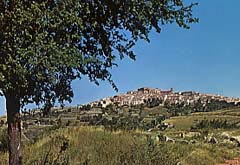
Situated on a high hill (683 m), San Marco La Catola (Foggia) enjoys a fine view on the Tavoliere and the neighbouring regions of Molise and Campania. It is an agricultural center, provided with industrial activities and conspicuous touristic potentialities. Its territory, (28.40 kmq), possesses important viticultural resources and interesting landscapes, endowed with great naturalistic value. Its name is due to the homonymous stream; from its dominant position you can have a beautiful view on the Occhito Dyke. The first historical traces of this town date back to 1369; nevertheless it was probably founded in the XIIIth century. The economy of San Marco La Catola is mainly based on zootechny and agriculture without forgetting its excellent wine production. It is renowned the quality of wine produced in the vineyards of Caramontella, between San Marco and Volturara. The ample woods surrounding the town attract a large number of tourists every year, especially in the summer. In St.Christopher's Wood,that is an area of particular naturalistic interest, rises the "Pan Refuge", built by the Provincial Administration in the Seventies. Nowadays the refuge offers its visitors the opportunity to carry out agritouristic activities and to taste typical dishes of the region. It is well worth, finally, visiting the town itself, out of its artistic and architectural aspects. The most interesting places to visit are: The ancient Castle-Fortress, with its two towers and the Monastery, which was built on the ruins of an ancient chapel in 1585. On that date the lord of the town, Marquis Giambattista Pignatelli, asked a community of Capuchin friars to establish a base in town. The complex was closed in 1811; reopened in 1818 and vacated again in 1867 due to civil suppression laws. The capuchins returned in 1901 at the express request of the inhabitants of San Marco La Catola. Padre Pio da Pietrelcina came to stay here several times. The touristic activity is still organized in a sporadic way; however it offers great potentialities of development due to the beautiful landscapes of the whole region. |
|
TOURISTIC INFO:
|
